Basements need flooring that can handle concrete, moisture, and temperature changes. We help you pick a floor built for below-grade spaces and install it correctly.
Basements are some of the most used spaces in a home: family rooms, guest rooms, home gyms, and play areas. They are also the toughest environment for flooring. Concrete slabs can hold moisture, temperatures run cooler, and minor water issues are always a possibility.
We start by looking at the slab and the conditions in the space, then recommend flooring that will hold up. Whether that is waterproof LVP, comfortable carpet, or engineered hardwood, we install it with the preparation and protection the space needs.
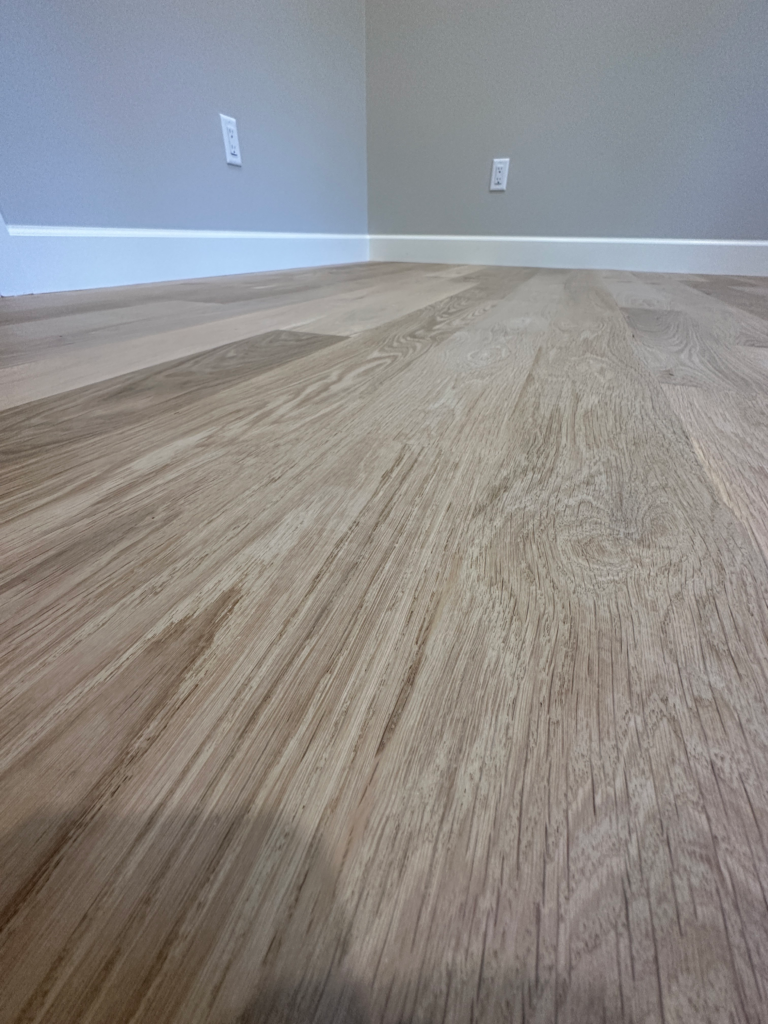
Each of these can work well below grade. The right one depends on how you use the space.
Waterproof, durable, and well suited to concrete slabs. The most common choice for basement family rooms and rentals.
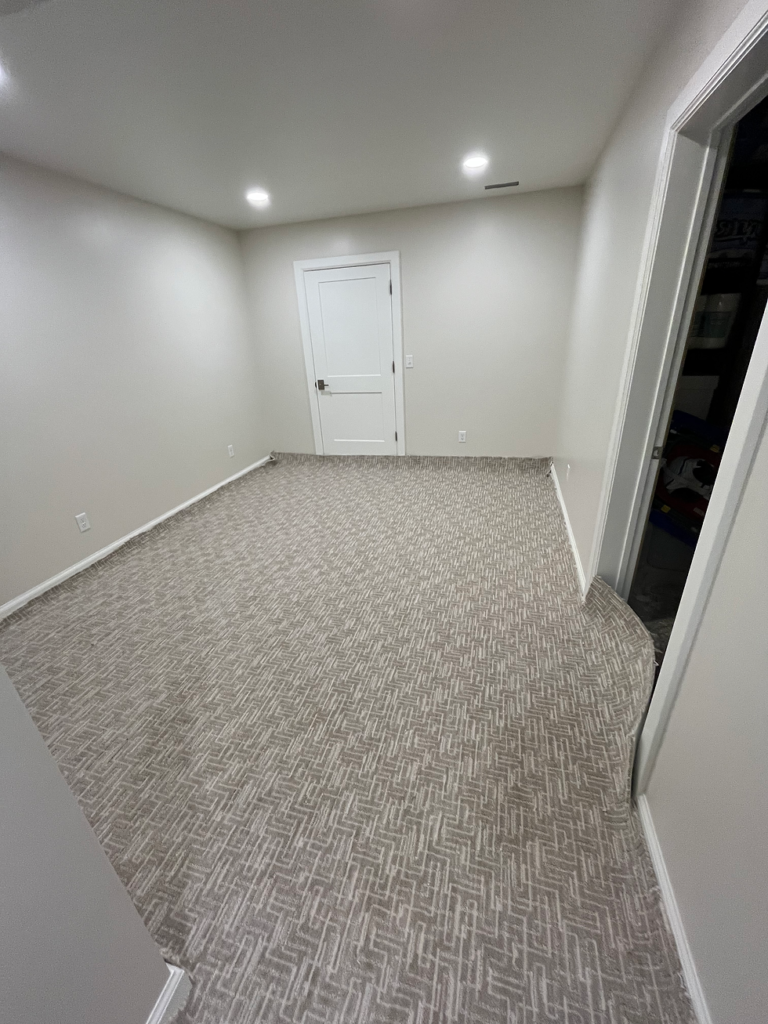
Warm and comfortable for bedrooms, theater rooms, and play areas, with pad options that add cushion over concrete.
Real wood construction that is more stable than solid hardwood, for basements where you want a natural wood floor.
Some water-resistant laminates can work in dry basements, but we only recommend them when conditions allow.
Concrete slabs can release moisture vapor that is invisible but damaging to flooring and adhesives. Slabs are also rarely perfectly flat, and low spots or cracks can show through or stress a new floor.
Before installation, we evaluate the slab and recommend the right underlayment, moisture protection, and preparation for the floor you choose. It is the difference between a basement floor that lasts and one that has problems in a few years.
You do not need every decision made before contacting us. Here is what to expect from first visit to finished floor.
We look at the slab, moisture conditions, and how the basement will be used.
We help you choose flooring and underlayment suited to below-grade conditions.
Old flooring is removed and the slab is cleaned and prepared for the new floor.
Flooring, transitions, stairs, and trim are installed and the space is cleaned up.
Basement projects are priced by the product and the condition of the slab. These are the main variables.
Clear scope and pricing before any work begins. Financing is available for qualifying projects.


 Trustindex verifies that the original source of the review is Google.
 Trustindex verifies that the original source of the review is Google.
 Trustindex verifies that the original source of the review is Google.
 Trustindex verifies that the original source of the review is Google.
 Trustindex verifies that the original source of the review is Google.
 Trustindex verifies that the original source of the review is Google.
 Trustindex verifies that the original source of the review is Google.
 Trustindex verifies that the original source of the review is Google.
 Trustindex verifies that the original source of the review is Google.
 Trustindex verifies that the original source of the review is Google.
Practical answers to the questions we hear most before a project starts.
For most basements, LVP is the most popular choice because it is waterproof and works well over concrete. Carpet is great for comfort in bedrooms and family rooms, and engineered hardwood can work where you want real wood.
Solid hardwood is generally not recommended below grade. Engineered hardwood is more stable and can often be installed in basements with the right preparation.
Many basement installations benefit from a vapor barrier or an underlayment with moisture protection. The right approach depends on the flooring and the slab.
Carpet can work well in dry basements, especially in bedrooms and living spaces. Basements with any history of water are usually better suited to LVP.
Small cracks are common and can often be addressed during prep. Larger cracks or uneven areas may need additional work. We evaluate this during the estimate.
Yes. We can carpet basement stairs or install hard-surface flooring with matching nosing as part of the project.
Tell us how you use the space and we will help you choose basement flooring that holds up, then put together a clear estimate.